The Ford Model T: How the 'Tin Lizzie' Revolutionized the World
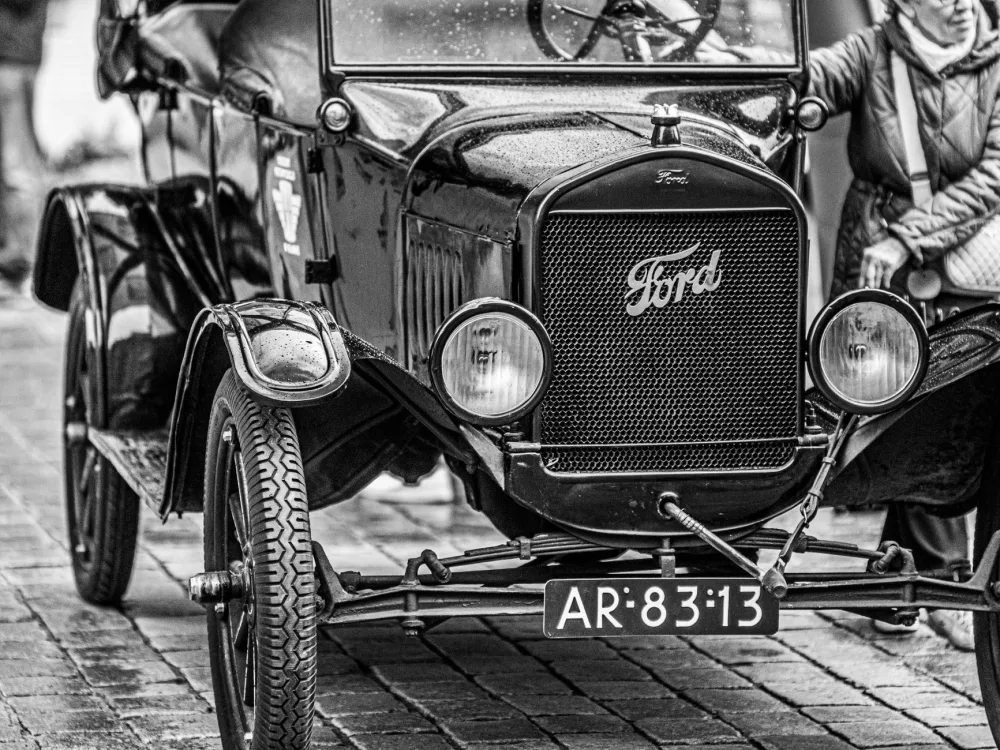
You know, when I think about the history of the automobile, one name just absolutely leaps out at me: the Ford Model T. It isn't just a car; it's a phenomenon, a genuine game-changer that completely reshaped society, industry, and even our very idea of personal freedom. I mean, honestly, it's hard to overstate its impact. Before the "Tin Lizzie," cars were pretty much luxury items, exclusive toys for the rich. Henry Ford, though, he had a radically different vision, and boy, did he deliver. He wanted to build a car that just about anyone could afford, a reliable vehicle for the working masses. And that, my friends, is exactly what he did. It's truly fascinating, isn't it?
Henry Ford's Audacious Vision
So, let's talk about Henry Ford for a second. This guy wasn't just building cars; he was building a dream, a new way of life for millions. His philosophy was pretty straightforward: create a simple, sturdy vehicle that was easy to operate and, crucially, cheap to buy. He famously said, "Any customer can have a car painted any colour that he wants so long as it is black." That wasn't just a quirky saying; it was a core part of his strategy to simplify production and cut costs. He wasn't interested in fancy bells and whistles; he was focused on utility and accessibility. I really admire that kind of clear-eyed dedication to a single purpose. It takes a certain kind of genius, doesn't it, to see a need so clearly and then devise an entirely new system to meet it? It certainly changed my perspective on what's possible when you put your mind to it.
The Manufacturing Revolution: Ford's Assembly Line
Now, how did he make it so affordable? Well, this is where the real magic happened – the moving assembly line. Before Ford, cars were built largely by hand, one at a time, often by skilled artisans. It was a slow, expensive process. Ford, drawing inspiration from things like meatpacking plants, completely revolutionized this. I mean, imagine, instead of workers moving around a stationary car, the car moved to the workers! Each person had a specific, repetitive task. This system had some pretty incredible advantages:
- Increased Efficiency: Production time for a Model T dropped from over 12 hours to less than two and a half hours. That's just wild, isn't it?
- Reduced Costs: Fewer skilled laborers were needed, and the standardization of parts meant less waste.
- Higher Wages: Ford famously introduced the $5 workday in 1914, which was more than double the going rate for most factory workers. This wasn't just altruism; he wanted his own workers to be able to afford the cars they were building! Smart, right?
This wasn't just about making cars; it was about inventing modern mass production. When I think about supply chains and factories today, I can't help but see Ford's fingerprints all over them. It's pretty much how everything's made now.
Design and Engineering: Simple Toughness
Let's dive a bit into the car itself. The Model T wasn't a speed demon, nor was it particularly luxurious. What it was, though, was incredibly robust and simple. It had a 20-horsepower, four-cylinder engine that could push it to about 40-45 miles per hour – pretty respectable for its time! The transmission was a two-speed planetary gear system, operated by foot pedals, which took a little getting used to, I imagine, but was incredibly durable.
- High Ground Clearance: Perfect for the rough, unpaved roads that were common back then. You really needed that.
- Simple Repairs: Owners could often fix issues themselves, and parts were standardized and readily available.
- Versatility: It could be adapted for various uses – farming, delivery, or just plain commuting. People got really creative with them!
It was designed to be utilitarian, tough, and easy to maintain, and it excelled at all those things. I'd say it's a masterclass in functional design.
Its Immense Societal Impact
The social impact of the Model T is, in my opinion, almost immeasurable. When the price dropped to a mere $260 by 1925 (from $850 in 1908), suddenly, the automobile was within reach for millions of American families. This wasn't just about getting from point A to point B; it was about unleashing a wave of personal freedom and mobility never before seen. Think about what this meant:
- Urban Sprawl: People could live further from their workplaces, leading to the growth of suburbs.
- Tourism: Families could finally take road trips, exploring their country in ways that were previously impossible. Small towns along newly developed highways saw new life.
- Economic Growth: The demand for cars spurred the creation of new industries – gas stations, repair shops, motels, road construction – creating countless jobs.
- Changing Social Dynamics: Courtship changed, rural isolation lessened, and everyone felt a bit more connected to the wider world.
I sometimes imagine what it must have felt like for a family to get their first Model T. It must have been an absolute revelation, truly life-altering. We take cars for granted now, but back then, it was like magic.
Life with a 'Tin Lizzie'
Operating a Model T was, let's just say, an experience. Starting it involved cranking a handle at the front, which could be a bit dangerous if you weren't careful – it had a nasty kickback sometimes! Driving required coordinating three foot pedals and a hand lever, definitely different from our modern automatic transmissions. But once you got the hang of it, owners absolutely adored their "Tin Lizzies." They were reliable, relatively easy to fix, and they truly opened up the world. People customized them, raced them, and relied on them daily. It wasn't just a machine; it was a member of the family, a partner in adventure. I can totally see why folks grew so attached.
A Lasting Legacy
Production of the Model T finally ceased in 1927, with over 15 million units sold. That's an astonishing number, even by today's standards. Its legacy, however, is so much more than just sales figures. It established the template for mass production, setting the stage for virtually all modern manufacturing. It democratized the automobile, transforming it from a luxury into a necessity. It shaped our infrastructure, our economy, and our very concept of independence. I mean, every car on the road today, in some way, owes a debt to the Model T. It truly was a machine that built a nation, wouldn't you say?
So, when I look back at the Model T, I don't just see an old car. I see ingenuity, accessibility, and a profound societal shift. It's a powerful reminder of how a simple, well-executed idea, combined with revolutionary manufacturing, can utterly change the world. And for that, I think the "Tin Lizzie" will always hold a special place in history.
About Editorial Team
Senior columnist and culture critic specializing in architectural designs, emerging high-growth systems, and contemporary philosophies.
All Categories
Recent Posts