Unleashing the Beast: Your Guide to the Best Gaming PC Under $1000
Unleashing the Beast: Your Guide to the Best Gaming PC Under $1000
Hey everyone! If you're anything like me, you've probably spent countless hours dreaming of owning a beast of a gaming PC. But then you look at your wallet and realize those dreams might need a bit of a reality check, right? Well, what if I told you that a truly awesome, high-performance gaming experience doesn't have to break the bank? Today, I want to talk about building or buying the best gaming PC under $1000. It's a sweet spot, a real balancing act between cost and power, but let me assure you, it’s absolutely doable!
Why this specific number, you might ask? It's pretty simple, actually. Below $800, you often start making some serious compromises that genuinely hurt your gaming performance. We’re talking about components that might struggle with modern titles, even at lower settings. Conversely, once you push past the $1200-$1500 mark, you're often getting into enthusiast territory where diminishing returns really kick in for most folks. That sub-$1000 price point? That’s where value meets performance in a spectacular way. You can play almost any modern game at 1080p or even 1440p with respectable frame rates, and often on high or very high settings. We’re not talking about absolute maxed-out 4K ray-tracing here, obviously, but we’re also not talking about playing Pac-Man. You'll be zipping around in Cyberpunk 2077, crushing enemies in Warzone, or exploring vast open worlds without a stutter. It’s an incredible feeling.
Where to Spend Your Hard-Earned Cash: The Key Components
Alright, let's get straight to the heart of any gaming PC: the graphics card. This is where you absolutely, positively should spend the lion's share of your budget. I mean it. For a $1000 build, I'm usually aiming for something like an NVIDIA RTX 3060, an AMD RX 6600 XT, or maybe even an RTX 4060 or RX 7600 if we can snag a fantastic deal during a sale. These cards are fantastic performers at 1080p, delivering consistently smooth frame rates, and they handle 1440p surprisingly well in many titles if you're willing to tweak a setting or two. Don't cheap out here; it's the biggest difference-maker in your gaming experience.
Next up, the brain of the operation: the CPU. You don't need a top-tier i9 or Ryzen 9 for pure gaming at this budget. Honestly, you'd be wasting money that could go to a better GPU. A Ryzen 5 5600 or an Intel Core i5-12400F/13400F are absolute champions for gaming. They offer excellent single-core performance, which games love, and enough cores for multitasking without blowing your budget. You really can't go wrong with either of these, and they often come with decent stock coolers, saving you a few extra bucks on an aftermarket solution. They're efficient, powerful, and fit perfectly within our budget constraints.
Now for the memory: 16GB of DDR4 RAM is the sweet spot. Period. Don't even think about 8GB for a gaming PC these days; it just isn't enough, and you'll find yourself hitting performance bottlenecks almost immediately. We want 16GB, preferably running at 3200MHz or 3600MHz. It's not super expensive anymore, and it makes a noticeable difference in game loading times, overall system responsiveness, and allows you to keep a few browser tabs open while gaming. Plus, it just looks better to have two sticks in there for dual-channel performance!
Storage? SSDs are mandatory, my friends. We're talking NVMe SSDs. Even a budget 1TB NVMe drive is shockingly fast and surprisingly affordable now. Forget about traditional HDDs for your main game library; they're just too slow and will severely impact your loading times and overall snappiness. If you absolutely need more storage, you could consider a 500GB NVMe for your OS and main games, plus a 1TB HDD for less frequently played titles or media, but honestly, a single 1TB NVMe is the way to go if the budget allows. It's a game-changer, literally.
When it comes to the motherboard, please, don't overspend. A B550 board for AMD or a B660/B760 board for Intel will do the trick nicely. You're looking for something reliable with enough ports and slots for your needs, not necessarily the one with all the RGB lighting or extreme overclocking features that you likely won't even use. We're on a budget, remember? Stick to the essentials and ensure it has decent VRMs for your chosen CPU. You can often find great deals on these boards.
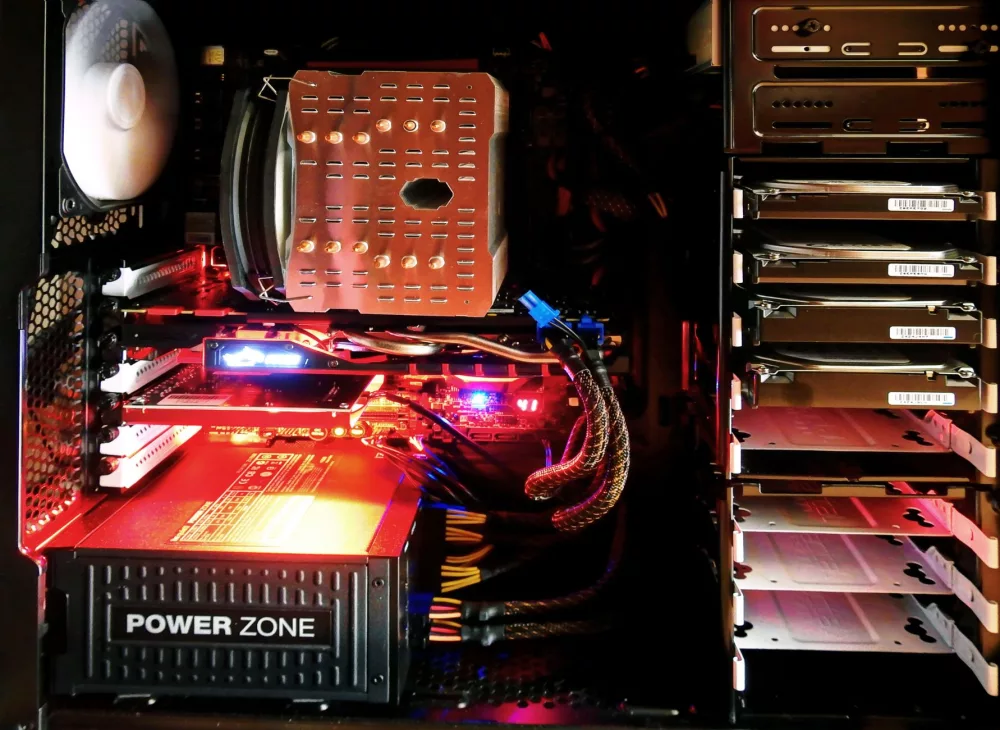
And here's a crucial piece of advice: Never, ever cheap out on your PSU (Power Supply Unit). This component powers your entire system, and a bad one can take everything down with it if it fails catastrophically. A reliable 550W or 650W 80 Plus Bronze or Gold certified unit from a reputable brand like Seasonic, Corsair, or EVGA is exactly what you need. It gives you some headroom for future upgrades too, which is always a smart move. Peace of mind is definitely worth a little extra investment here.
Finally, the case. This is where personal preference really comes in, but again, don't spend too much. Look for a case with good airflow and decent cable management options. Something like a Phanteks Eclipse P300A or a Fractal Design Focus G are excellent budget-friendly choices that offer good cooling and don't look like a spaceship exploded. Aesthetics are great, of course, but performance and thermals really do come first, especially when you're pushing your components during gaming sessions.
What Can You Realistically Expect?
So, what can you really expect from a sub-$1000 gaming PC? You're going to crush 1080p gaming at high to ultra settings in most titles, easily hitting 60+ FPS. Many games will even be perfectly playable at 1440p, especially if you dial down a setting or two. Don't expect to max out every single setting with ray tracing enabled at 4K; that's just not realistic for this budget, and that's completely okay! We're aiming for an amazing, smooth, and highly enjoyable gaming experience, not bleeding-edge future-proofing, though these systems certainly have a decent lifespan before needing major upgrades.
Tips for Squeezing Every Penny
- Hunt for Sales: Want to squeeze every penny out of your budget? Keep an eye out for sales, especially around holidays. Black Friday, Cyber Monday, Amazon Prime Day – these are your absolute best friends. Component prices fluctuate wildly, and a patient shopper can save hundreds.
- Consider Used Components: You might think about gently used components, particularly GPUs. I've bought used GPUs before, and it can save you hundreds, but you've gotta be smart about it. Stick to reputable sellers on platforms like eBay with strong buyer protection, or local marketplaces where you can test the component.
- Build It Yourself: Don't be afraid to build it yourself! It's not as hard as it looks, honestly. There are tons of fantastic step-by-step tutorials on YouTube. You'll save on labor costs, and it's incredibly satisfying to know you assembled your own gaming rig.
- Refurbished Deals: Refurbished components from trusted retailers (like Newegg or Amazon Renewed) can also be a fantastic option, often coming with a warranty.
- OS Savings: And hey, don't buy Windows at full price! You can find OEM keys for much, much less from legitimate third-party sites, or even run it unactivated initially to save some cash for better hardware.
Your Upgrade Path
One of the best things about building a PC is its incredible upgradeability. Unlike a console, which is a closed system, your PC is modular. With a solid foundation—a good CPU, motherboard, and PSU—you can easily swap out your graphics card a few years down the line for a significant performance boost. Maybe add more RAM, or a second SSD for even more games. It's a system designed to evolve with your needs and the changing demands of new games, which is a huge advantage.
So, there you have it. Building an incredible gaming PC for under $1000 isn't just a pipe dream; it's a very achievable reality. With a bit of smart shopping, knowing exactly where to allocate your budget, and maybe a little DIY spirit, you can assemble a machine that'll deliver countless hours of high-quality gaming fun. Don't let anyone tell you otherwise. Get out there, do your research, and build something awesome!
About Editorial Team
Senior columnist and culture critic specializing in architectural designs, emerging high-growth systems, and contemporary philosophies.
All Categories
Recent Posts